

ติดต่อเรา
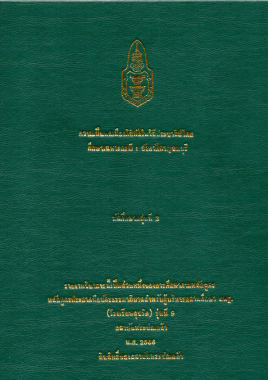
0-2288-5882-3ความเป็นพลเมืองดิจิทัลในวิถีประชาธิปไตย ศึกษาเฉพาะกรณี : จังหวัดกาญจนบุรี
-Code
ผู้แต่ง
ผู้แต่งร่วม
หน่วยงาน
ปีที่เผยแพร่
ประเภทผลงานวิจัย
ประเภทเอกสาร
คำสำคัญ
สร้างเมื่อ
สร้างโดย
บทคัดย่อภาษาไทย
การวิจัยเรื่องนี้มีวัตถุประสงค์เพื่อศึกษาแนวทางความเป็นพลเมืองดิจิทัลในวิถี ประชาธิปไตยของผู้บริหารสถานศึกษาและครู เฉพาะกรณี : จังหวัดกาญจนบุรีกลุ่มตัวอย่าง คือ ผู้บริหาร สถานศึกษา และข้าราชการครูในสำนักงานเขตพื้นที่การศึกษามัธยมศึกษากาญจนบุรีกลุ่มตัวอย่างจากการ คำนวณโดยใช้ตารางประมาณการกำหนดขนาดตัวอย่างของเครจซีและมอร์แกนและใช้เทคนิคการเลือก ตัวอย่างด้วยวิธีสุ่มแบบแบ่งชั้น จำนวน 313 คน ผู้วิจัยจึงสุ่มแจกแบบสอบถามไปตามสถานศึกษา สังกัด สำนักงานเขตพื้นที่การศึกษามัธยมศึกษากาญจนบุรี จำนวน 407 ฉบับ โดยให้มีจำนวนแบบสอบถาม มากกว่าจำนวนตัวอย่างที่คำนวณได้ร้อยละ 30 แล้วนำแบบสอบถามที่ได้รับกลับมาตรวจสอบความ ครบถ้วนสมบูรณ์ของคำตอบ ได้แบบสอบถามทั้งสิ้น 383 ฉบับ โดยคิดเป็นร้อยละ 94.1 ของ แบบสอบถามทั้งหมดซึ่งมีจำนวนมากกว่าตัวอย่างที่คำนวณได้ ผู้วิจัยจึงนำแบบสอบถามทั้ง 383 ฉบับ เครื่องมือที่ใช้ในการวิจัยเชิงปริมาณแบบสอบถามประกอบด้วย 2 ส่วน ได้แก่ 1) ข้อมูลทั่วไปของผู้ตอบ แบบสอบถาม และ 2) ความเป็นพลเมืองดิจิทัลในวิถีประชาธิปไตย และเชิงคุณภาพ เก็บข้อมูลการ สัมภาษณ์ในรูปแบบการสัมภาษณ์แบบมีโครงสร้าง (structured interview) ผลการศึกษาวิจัย พบว่า 1. ระดับความเป็นพลเมืองดิจิทัลของผู้บริหารสถานศึกษาและครูเฉพาะกรณี: จังหวัด กาญจนบุรี โดยภาพรวมอยู่ในระดับมาก เมื่อพิจารณารายด้านพบว่าอยู่ในระดับมาก โดยเรียงค่าเฉลี่ยจาก มากไปน้อย ดังนี้ คือ มารยาทดิจิทัล ทักษะการคิด และความคิดสร้างสรรค์ทางดิจิทัล สื่อสารดิจิทัล และมี ส่วนร่วมในสังคม การใช้เทคโนโลยีและการซื้อขายดิจิทัลอย่างมีจริยธรรม สุขภาพทางกายและจิตใจ เพื่อ ป้องกันผลกระทบจากโลกดิจิทัล ความปลอดภัย ความรับผิดชอบทางดิจิทัล การเข้าถึง และการรู้เท่าทัน สื่อสารสนเทศ ตามลำดับ 2. ระดับวิถีประชาธิปไตยของผู้บริหารสถานศึกษาและครูเฉพาะกรณี: จังหวัดกาญจนบุรี โดยภาพรวมอยู่ในระดับมาก เมื่อเมื่อพิจารณารายด้านพบว่าอยู่ในระดับมาก โดยเรียงค่าเฉลี่ยจากมากไป น้อย ดังนี้ คือ หลักคุณธรรม หลักการเคารพ หลักความเสมอภาค หลักความรับผิดชอบ หลักนิติธรรม เหตุผลและการมีส่วนร่วม ตามลำดับ 3. ความสัมพันธ์ระหว่างพลเมืองดิจิทัลกับวิถีประชาธิปไตย พบว่า ความเป็นพลเมือง ดิจิทัล มีความสัมพันธ์กับวิถีประชาธิปไตย ในระดับสูง อย่างมีนัยสำคัญทางสถิติที่ระดับ .01 ในลักษณะ คล้อยตามกัน 4. ผลการวิเคราะห์วิจัยแนวทางความเป็นพลเมืองดิจิทัลในวิถีประชาธิปไตย พบว่า 1) การปรับตัวและรู้เท่าทันสื่อยุคใหม่ 2) การส่งเสริมการใช้เทคโนโลยีอย่างชาญฉลาด 3) การส่งเสริม การทำความเข้าใจผลกระทบของเทคโนโลยีดิจิทัลที่มีต่อสังคมวิถีประชาธิปไตย 4) การส่งเสริม ด้านการ สื่อสารในยุคดิจิทัลที่ทุกคนจำเป็นต้องมีทักษะต่าง ๆ 5) ภาครัฐต้องเร่งส่งเสริมสิทธิความเป็นพลเมืองดิจิทัลให้กับประชาชน 6) การส่งเสริมการเรียนรู้ทั้งในระบบ และนอกระบบ รวมถึงการทำคู่มือให้กับ ผู้ปกครองให้รู้เท่าทันสื่อเทคโนโลยีดิจิทัล 7) การสร้างหลักสูตรวิชาเฉพาะเพื่อพัฒนาทักษะ การรู้เท่าทัน สื่อ และ 8) การส่งเสริมประชาชนให้ใช้เทคโนโลยีดิจิทัลในการมีส่วนร่วมทางการเมืองที่เหมาะสม คำสำคัญ พลเมืองดิจิทัล ความเป็นพลเมืองดิจิทัล วิถีประชาธิปไตย
บทคัดย่อภาษาอังกฤษ
The objective of this research was to study the digital citizenship in democratic ways of school administrators and teachers, specific case studies of Kanchanaburi Province. The sample group was administrators and teachers under Kanchanaburi Secondary Educational Service Area Office, sample size determination calculated by using Krejcie and Morgan's estimation table and used the stratified random sampling technique, totaling 313 people. The researcher therefore randomly distributed the 407 questionnaires to the schools under Kanchanaburi Secondary Educational Service Area Office, the number of questionnaires was greater than the calculated sample size, the received questionnaires were then returned to check the completeness of the answers. A total of 383 questionnaires were received, accounting for 94.1 percent of the total questionnaires, which was more than the calculated sample. The researcher therefore used all 383 questionnaires, the quantitative research instrument consisted of 2 parts; 1) general information of the respondents, and 2) digital citizenship in a democratic way, and the qualitative interview data collected in a structured interview. format. The research results found that 1. The digital citizenship level of school administrators and teachers, specific case studies of Kanchanaburi Province, overall was at the high level. When considering each aspect, it was found to be at a high level. The averages were arranged from highest to lowest as follows: digital etiquette, thinking skills and digital creativity, digital communication and participate in society, ethical using of technology and digital trading, physical and mental health, preventing impacts from the digital world, safety, digital responsibility, accessibility, and information media literacy, respectively. 2. The democratic way level of school administrators and teachers, specific case studies of Kanchanaburi Province, overall was at the high level. When considering each aspect, it was found to be at a high level. The average values were arranged from highest to lowest as follows: principles of morality, respect, equality, responsibility, rule of law, and reason and participation, respectively. 3. The relationship between digital citizenship and democratic ways found that digital citizenship had a high relationship with the democratic ways, with statistical significance at the .01 level, in a consistent manner. 4. The results of the research analysis of digital citizenship in the democratic ways found that 1) adapting and being aware of modern media, 2) promoting the smart use of technology, 3) promoting understanding of the impact of digital technology on democratic society, 4) promoting communication in the digital needs for various skills, 5) accelerating of the government sector to promote the digital citizenship rights for citizens, 6) promoting both formal and non-formal learning, including creating a manual for parents to be knowledgeable about digital technology media, 7) creating a curriculum for specific subjects to develop skills media literacy; and 8) promoting citizens to use digital technology for appropriate political participation. Key words: digital citizen, digital citizenship, democratic ways
Creative Commons : CC




สถิติ
- เยี่ยมชม : 36959 ครั้ง
- ถูกใจ :
- ดาวน์โหลด : 6247 ครั้ง